
Envelope budgeting: how the cash envelope method works, and when it doesn't
Envelope budgeting splits your spending money into labelled envelopes. How the cash envelope method works, a worked example, and digital versions.
Published
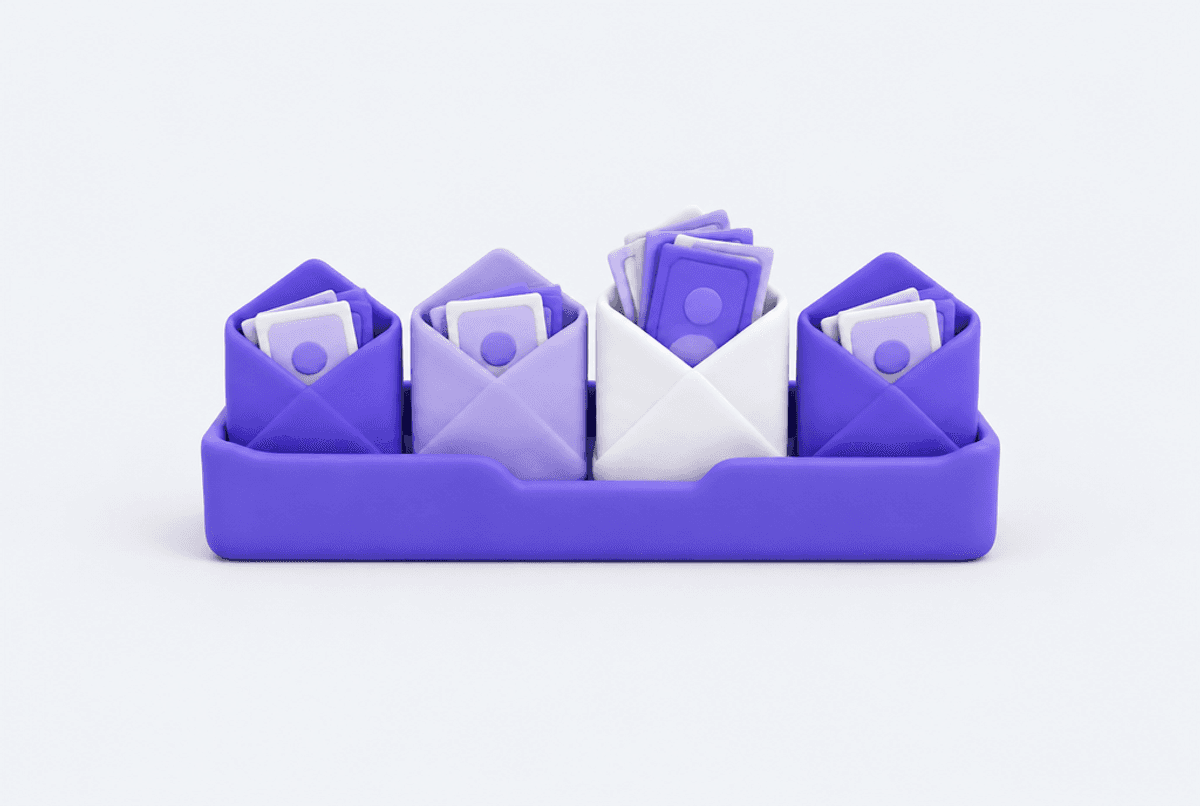
It's the 10th, five days before payday. The grocery envelope on the kitchen shelf has ₱420 in it. The eating-out envelope is empty, because of two fast-food runs and a birthday. Nobody has to check an app or a statement to know what that means. Dinner this week is cooked at home, and the ₱420 has to cover it.
Envelope budgeting means splitting your spending money into labelled envelopes on payday, one for each category, such as groceries, fares and eating out, and spending each category only from its own envelope. When an envelope is empty, that category is finished until the next payday, unless you deliberately move money across from another one. Bills like rent are paid separately. The method works because you can see money running out before it's gone. Its weak point is cashless spending, which never passes through an envelope, so most people now run a digital version alongside the cash.
How the envelope method works
The idea is old and simple. On payday, after the bills and savings are taken care of, you take out the money for day-to-day spending in cash. You split it into envelopes, one per category, and write the category and the amount on the front.
Then there's one rule: each kind of purchase is paid from its own envelope. Groceries come out of the grocery envelope. Jeepney and tricycle fares come out of the fares envelope. If the eating-out envelope is empty on the 10th, you don't eat out again until the 15th.
That's the part that makes it work. Most budgets are numbers on a page, and it's easy to overspend a number. It's much harder to overspend an envelope you can see is nearly empty. The limit is physical, and you notice it before you go over, not a week later.
The second rule matters as much as the first: you can move money between envelopes, but only on purpose. If the fares envelope is short because of a week of extra trips, you can take ₱200 from the fun envelope. What you can't do is borrow from "somewhere" and forget about it. Every move is a decision.
What goes in an envelope, and what doesn't
Envelopes are for spending that changes from week to week and that you control at the counter. They aren't for fixed bills.
Good envelope categories:
- Groceries and market
- Eating out and food delivery
- Transport: fares, fuel, ride-hailing
- Household items: soap, detergent, gas refills
- Personal spending, or "fun money"
- Load and data, if you buy it in small amounts
Better paid directly:
- Rent or amortisation
- Electricity, water and internet bills
- Loan and credit card payments
- Savings, ideally moved out on payday before anything else
Five to seven envelopes is plenty for most households. More than that and you spend half your time sorting coins. If a category is small and rarely runs out, merge it with another.
A worked example in pesos
The amounts below are made up, to show how the pieces fit. Use your own.
Say you take home ₱14,000 every 15th and 30th, and it's the 30th. Rent, bills and a savings transfer take ₱8,000 of each pay, straight from your account. That leaves ₱6,000 for day-to-day spending until the next payday. You withdraw it and split it:
- 1
Groceries: ₱2,500
The biggest envelope. A weekly market run plus top-ups for rice and eggs.
- 2
Transport: ₱1,200
Fares to work and back for about eleven working days, with a little spare for one-off trips.
- 3
Eating out: ₱900
Lunches out, merienda and the odd delivery order.
- 4
Household: ₱600
Soap, detergent, toiletries and a gas refill when it's due.
- 5
Personal and fun: ₱800
Anything you want that isn't on another list, no explanation needed.
That adds up to ₱6,000. Nothing is left in your wallet that doesn't belong to an envelope.
A week in, on the 7th, you check. Groceries has ₱1,300 left, which is fine. Eating out has ₱150, which is not. You have three choices: stop eating out until the 15th, move ₱200 across from the fun envelope, or accept that eating out will be short and cook more. Any of them is a reasonable answer. The point is that you chose one, on the 7th, instead of discovering on the 14th that the money had gone.
At the end of the pay period, look at what's left in each envelope. Anything over goes to savings, or stays in the envelope as a buffer for next time. If one envelope ran out early three pay periods in a row, its amount is wrong, not you. Raise it and cut somewhere else.
Envelope budgeting without real envelopes
The envelope is just a container with a limit. It doesn't have to be paper. There are three common ways to run it digitally, and many people mix them.
Separate pockets or accounts. Some banks and e-wallets let you set up separate savings goals, pockets or sub-accounts. You can treat each one as an envelope, and move each envelope's amount in on payday. This is the closest to the paper version, because the money is physically apart. The downside is moving money between pockets every time you pay, and not every app lets you pay straight from a pocket.
One account, a running record. Keep the money in one place, and keep a record of how much each category has left. A notebook works. So does a spreadsheet with one column per envelope. Each time you spend, you subtract it from that envelope's line. This is the most flexible way and the easiest to let slip, because nothing stops you spending past zero.
Cash for some, digital for the rest. Use real envelopes for the categories you mostly pay in cash, like the market and fares, and a record for the ones you mostly pay by QR or card, like delivery and online shopping. This is often the most honest fit, because it matches how you actually pay.
Whichever you choose, the habit is the same: write down what leaves each envelope, and check the balances at least once a week. If you mostly pay in cash, the cash tracking guide covers the daily count in more detail.
Payday
Pay bills and move savings first. Whatever is left is your envelope money.
Fill
Split it into five to seven envelopes, cash or digital, and write each amount down.
Spend
Pay each purchase from its own envelope. Move money across only on purpose.
Check
Once a week, look at what's left in each one. Adjust before it's empty, not after.
Reset
At the next payday, sweep leftovers to savings and change any amount that was wrong.
Where tracking fits
Envelopes control the money. They don't remember where it went. At the end of the month you know the eating-out envelope ran out, but not whether it was lunches, delivery or one big dinner. That detail is what tells you how to set next payday's amounts.
In Cashmonki, you can log a purchase by typing a sentence into Ask, such as "market 640, tricycle 30", and it creates the entries for you to confirm. You can also photograph a receipt with receipt scanning. The free version allows three Ask messages and three receipt scans a day, and you can add anything beyond that by hand. Spending charts then show your totals by category and compare one period with another, which is the number you need when you refill the envelopes.
If you keep your envelope cash apart from your bank money, a separate wallet for cash keeps its balance from mixing with the rest. The free version allows two wallets and doesn't allow custom categories, so an envelope like "Load and data" may have to share a built-in category. Cashmonki Plus ($2.99 a month or $19.99 a year) removes the wallet limit.
Cashmonki never connects to your bank, so it can't see what's really in an account or an envelope. It shows what you've recorded. If you skip a few purchases, the record and the cash will drift apart, and only counting the envelope will tell you.
Where envelope budgeting breaks down
It's a good method for a lot of people, and the wrong one for some. Be honest about which you are.
Cashless spending leaks around it. This is the big one. If most of your spending is QR, card or online, paper envelopes control very little. You need the digital version, and that relies on you keeping the record, which is the hard part of every budget.
Cash at home carries risk. A stack of envelopes is easy to lose, easy to borrow from and an obvious target. Keep only what you'll spend before the next payday, and don't use envelopes for savings or large amounts. Those belong in a bank or e-wallet account.
Irregular income complicates the fill. If your pay changes every month, fill the envelopes from your lowest likely month, and add to them when more arrives. The freelancer budgeting guide explains how to set that floor.
Shared envelopes need shared rules. If two people spend from the same envelope, agree on what it's for and how you'll record it, or it will run out and nobody will know why.
It only covers spending. Envelopes don't plan your savings, your debt payments or the bills that come once a year. Pair them with a plan for those, such as a zero-based budget for the whole month and sinking funds for the yearly costs.
Try it for one pay period
You don't need to switch your whole life to cash. Pick the two categories that run over most often, usually food out and groceries. On the next payday, put exactly what you planned for each into its own envelope, paper or digital, and spend those categories only from there.
At the end of the pay period, look at what's left. If the envelopes held, add another category. If they ran dry in the first week, you've learned what that category really costs, which is the number most budgets get wrong.
Common questions
Envelope budgeting means splitting your spending money into envelopes, one for each category such as groceries, fares and eating out. You spend each category only from its envelope. When an envelope is empty, that category is done until the next payday, unless you move money from another envelope on purpose.
Partly. The physical envelopes only control cash. For card, e-wallet and QR payments, you need a digital version: a separate e-wallet or savings pocket per envelope, or a written or app record of how much each category has left.
The ones that change from week to week and tend to run over: groceries, eating out and food delivery, transport, household items and personal spending. Fixed bills like rent and loan payments are better paid straight from your account.
You either stop spending in that category or move money from another envelope, and you decide which on purpose. If the same envelope runs out every pay period, the amount is too small, and you should raise it next time and cut somewhere else.
They're close relatives. Zero-based budgeting gives every peso of income a job on paper. Envelope budgeting puts the spending part of that plan into separate envelopes so you can see each job's money run down.
Log what leaves each envelope in Cashmonki, then let your real totals set next payday's amounts.
Free to start · No account needed · No ads
On a computer? Scan with your iPhone camera.